
















(this may take a few seconds)
Most fifteenth century German publications were printed with a form of Schwabacher type. This font evolved from the popular Bastarda scripts. Schwabacher is easily distinguished from Fraktur fonts by the rounded stems found in o, d and other letters. Its bold and original character complements renaissance illustrations. It is very suitable to augment calligraphic work.
Alte Schwabacher WF   Punctuation: yes  Uppercase: yes  Lowercase: yes  Numerals: yes
Inspired by the Neudörffer Fraktur, which Dürer had used to print some of his treatises, Johann Breitkopf designed the Breitkopf Fraktur  - which represents what is commonly thought of as a
Breitkopf Fraktur WF   Punctuation: yes  Uppercase: yes  Lowercase: yes  Numerals: yes
The founder of the famous Luther foundry in Frankfurt is said to have started his business with borrowed punches for the Coelnisch Current Fraktur. This font is an excellent choice for headlines and titles and is best used sparingly at sizes above 30 points. It works well with Theuerdank or Gebetbuch Fraktur, but also provides a nice contrast when used with Luther Fraktur.
Coelnisch Current WF   Punctuation: yes  Uppercase: yes  Lowercase: yes  Numerals: yes
The middle of the 19th century saw the advent of the
Fette Haenel Fraktur WF   Punctuation: yes  Uppercase: yes  Lowercase: yes  Numerals: yes
Looking at this font will best explain the name
Ganz Grobe Gotisch WF   Punctuation: yes  Uppercase: yes  Lowercase: yes  Numerals: yes
The very first true Fraktur font to be developed. This font was used for Emperor Maximilian's first printing project, the Gebetbuch (prayer book). Designed by Leonhard Wagner
Gebetbuch Fraktur WF   Punctuation: yes  Uppercase: yes  Lowercase: yes  Numerals: yes
The earliest commercial font, Gutenberg Bibelschrift  is also one of the most beautiful. The inventor of modern printing, Johannes Gutenberg, put twenty years of effort into its development as part of his scheme to produce books that were identical to the expensive handwritten volumes then available. This font contains over 290 letters, so as to better resemble the variations of handwriting.
Gutenberg Bibelschrift WF   Punctuation: yes  Uppercase: yes  Lowercase: yes  Numerals: yes
This Font was designed by Erasmus Luther in 1708 and still is one of the most beautiful and legible Fraktur fonts. The Luther Fraktur forms a link between the earlier Gebetbuch Fraktur and the later Breitkopf Fraktur types. It is very well suited for any type of printing and especially so for religious texts. Text in Luther Fraktur looks best if it is printed large: at about 13 - 14 points.
Luthersche Fraktur WF   Punctuation: yes  Uppercase: yes  Lowercase: yes  Numerals: yes
The type designer Rudolf Koch drew inspiration from his strong christian belief. He devoted his life to the development of a fitting typeface for the bible. Maximilian, appropriately named for the Fraktur father, comes close to this goal. It makes a broad and noble impression which makes it ideal for headlines and quotes.
Maximilian Gotisch WF   Punctuation: yes  Uppercase: yes  Lowercase: yes  Numerals: yes
From 1480 to 1530 most German-language printing was done with Schwabacher type. The rapid rise of Fraktur all but eliminated it.  It experienced a renaissance in the 17th century, when this particular font was designed. Its appearance is robust, matching the bold, dark wood cuts of that period very well. Neue Schwabacher is equally well suited as a text or headline font.
Neue Schwabacher WF   Punctuation: yes  Uppercase: yes  Lowercase: yes  Numerals: yes
Adalbert von Chamisso’s story about a man who sold his shadow to the devil inspired this curious font - a graceful type surrounded by a fine shadow line. Peter Schlemihl is a graceful font that is best used in headlines, but also makes an interesting text font.
Peter Schlemihl WF   Punctuation: yes  Uppercase: yes  Lowercase: yes  Numerals: yes
One of Emperor Maximilian's ambitious printing projects was a glorification of his voyage west to wed Mary of Burgundy. The romanticized account of this voyage was lavishly printed in the epic
Theuerdank Fraktur WF   Punctuation: yes  Uppercase: yes  Lowercase: yes  Numerals: yes
The immense cultural changes at the close of the 18th century triggered a revolution in type design.  Johann Friedrich Unger, a renowned Berlin printer and publisher presented this classicist, light, sharply contrasted Fraktur in 1793. It was very well received by the luminaries of the time, Goethe's
Unger Fraktur WF   Punctuation: yes  Uppercase: yes  Lowercase: yes  Numerals: yes
When Martin Luther completed his translation of the Bible, printing had already been a booming industry for over eighty years. It is no surprise that the
Wittenberger Schwabacher WF   Punctuation: yes  Uppercase: yes  Lowercase: yes  Numerals: yes
With its graceful lines and smooth gray value, Zentenar Fraktur could easily be considered the most beautiful of all Fraktur Types. It was one of the last Fraktur fonts produced before World War II, and as such presents the pinnacle of Fraktur development.
Zentenar Fraktur WF   Punctuation: yes  Uppercase: yes  Lowercase: yes  Numerals: yes
A stack of old Family letters yielded this personal handwriting. My grandfather wrote a clear, yet traditional script, and we thought we'd make a fun font for personal and informal correspondence. Your friends will probably curse you if you use it for longer letters —  it tends to be hard on the eyes! There are no numeral, as my grandfather habitually
Grossvater Kurrent WF   Punctuation: yes  Uppercase: yes  Lowercase: yes  Numerals: no
Kurrent Kupferstich is a calligraphic version of Old German Script. If you are researching your family history, or have old German letters or documents, you will need to learn this script in order to read them. This font is an excellent tool to help you accomplish that. You can write any text on your computer in a typeface of your choice, then convert it to Old German Script using this font. That way you can practice your reading on a familiar text.
Kurrent Kupferstich WF   Punctuation: yes  Uppercase: yes  Lowercase: yes  Numerals: yes
The Viennese graphic artist Ludwig Sütterlin (1865 - 1917) devised a form of Kurrent that consisted of wide curves and very few sharp angles and was intended as the base on which school children could develop their individual handwriting. The Sütterlin Kurrent was introduced at Prussian schools in 1915 and had become the standard in all of Germany by 1934. Sütterlin Kurrent is the handwriting remembered by the older German generation.
Suetterlin WF   Punctuation: yes  Uppercase: yes  Lowercase: yes  Numerals: yes


$59.95  Instant Download
  Check here to add a backup CD and printed manual for only $15.00! 
Operating Systems:
Windows Macintosh
Formats Included:
TrueType Type 1
Manual
Sample Fonts
Brochure

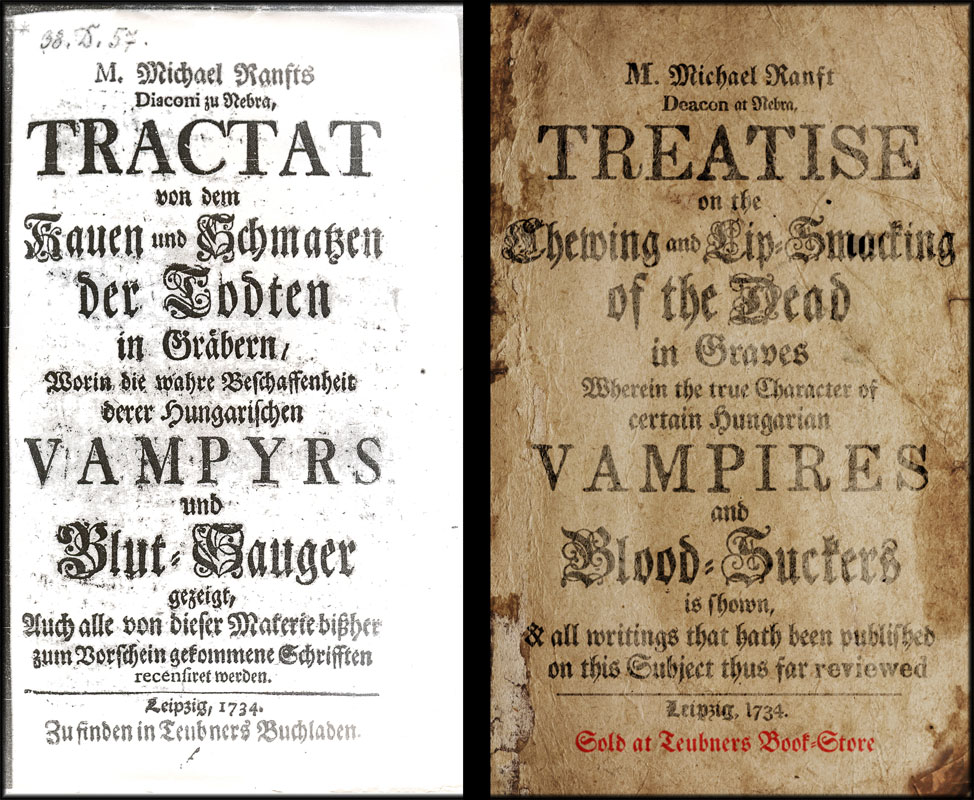
Click on Samples to Enlarge


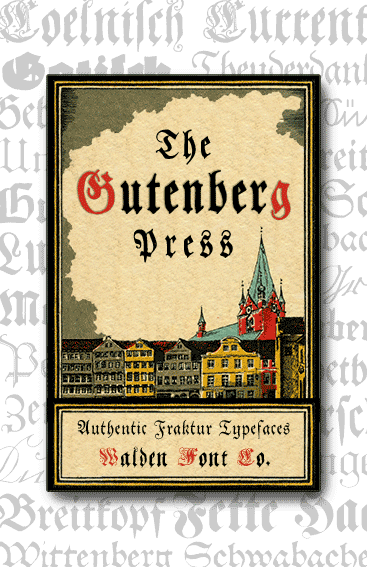
Walden Font is proud to present a collection of 18 classic Fraktur and German Script fonts.  The collection ranges from the original font used by Johannes Gutenberg to print his famous bible, to the last of the true Fraktur fonts developed just before World War II.
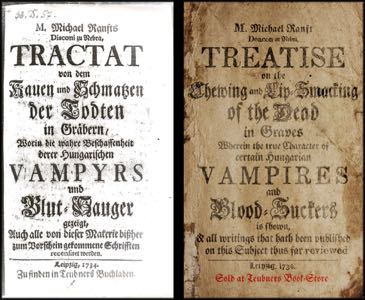
Fraktur is being rediscovered by sophisticated book designers, calligraphers and typographers. The need for an "electronic revival" of these fonts is pressing.  We are pleased to announce that we have come to the rescue.

The Gutenberg Press features:

  • 15 Fraktur Fonts
  • 3 Handwriting (Old German Script) Fonts
  • Over 60 clip-art images
  • User Manual containing:
    • Special character charts
    • History of Fraktur
    • History of each font
    • Rules for typesetting Fraktur text
    • Many Samples


$59.95  Instant Download
  Check here to add a backup CD and printed manual for only $15.00!